Accelerating Liquid-Cooling Adoption: How to Precisely Guard Against Liquid Leakage Risks
News 2026-08-28
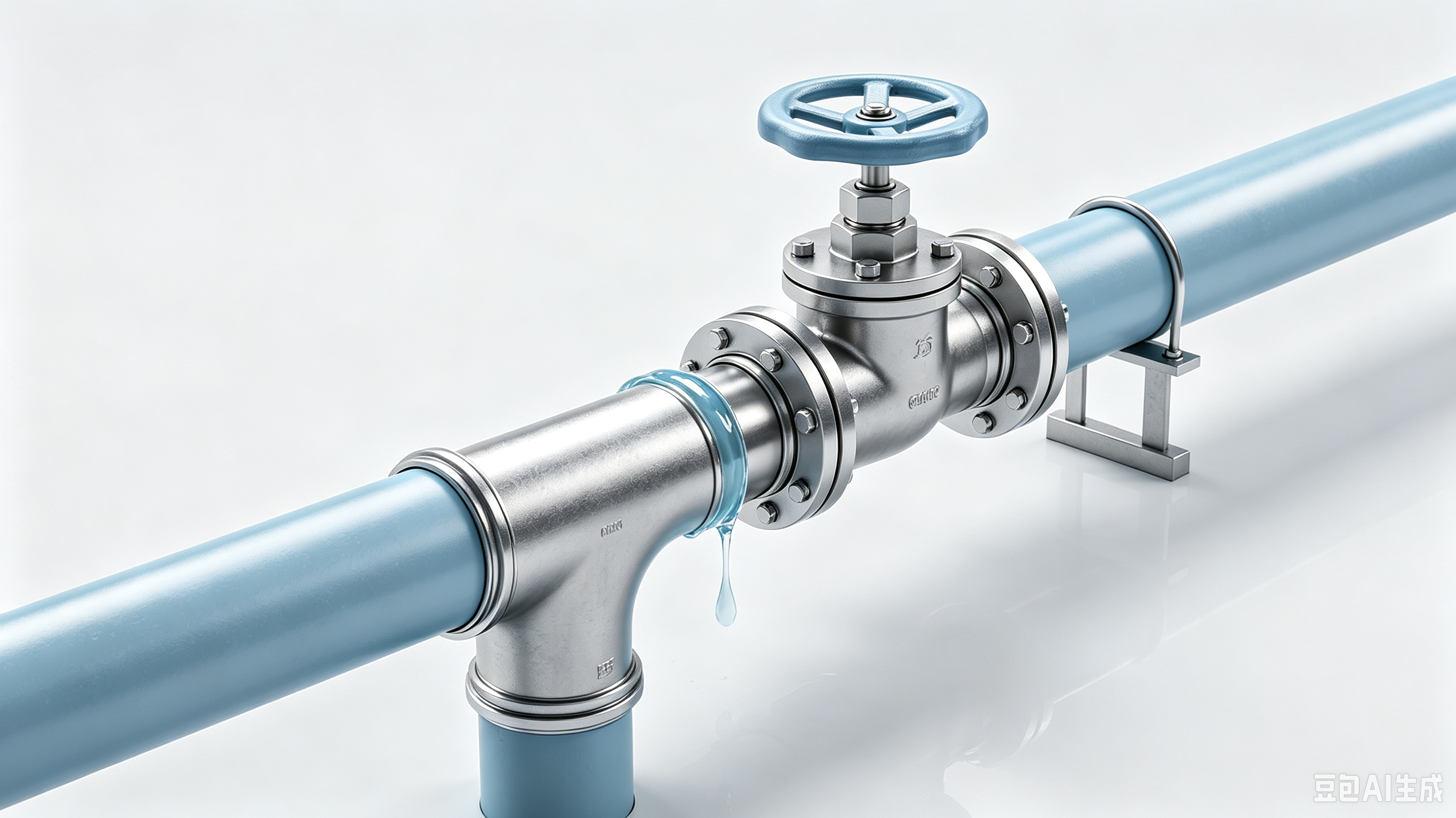
In the era of high-density computing power, liquid cooling has emerged as a mainstream heat-dissipation solution for data centers, effectively addressing heat-dissipation challenges brought by high thermal density. Nevertheless, given liquid-cooling systems feature intricate pipelines and continuously circulating coolants, liquid leakage has become a critical hidden hazard in computer rooms. Most liquid-cooling failures stem from accumulated micro-seepage and slow dripping, which eventually result in equipment damage and computing-power outages. Therefore, refined liquid-leakage monitoring stands as a core priority for computer-room operation and maintenance.
We have sorted out four high-frequency leakage-prone points in liquid-cooling systems, which also constitute major blind spots in conventional operation and maintenance.
I. Dissecting Liquid-Cooling Systems: Four High-Frequency Liquid-Leakage Risk Points
- Pipeline connection joints: A large number of quick-connect, flange and shunt interfaces exist across the system. Subject to long-term equipment vibration, temperature variation and disassembly-assembly operations, these interfaces are prone to sealing aging and joint loosening, giving rise to highly concealed micro-seepage that will corrode equipment circuits over time.
- CDU power heat-exchange assemblies: As core units of liquid-cooling systems, pump seals, pipeline welding spots and heat-exchanger interfaces operate under persistent high pressure. They are susceptible to wear-induced leakage with large leakage volume and rapid spread, which may readily trigger server short-circuits and cluster outages.
- Server cold-plate terminals: Sealing gaskets on cold plates attached to CPUs and GPUs tend to deform and crack under recurring temperature swings. Bumps during equipment maintenance may also cause minor interface damage, posing direct threats to core precision computing-power hardware.
- Concealed pipeline zones: Chronic leakage caused by ageing and corrosion of concealed pipelines laid under computer-room raised floors remains hard to detect via manual inspection. By the time leakage is spotted, faults have already expanded substantially, driving up operation and maintenance costs sharply.
II. Prominent Pain Points of Conventional Monitoring
At present, most computer rooms rely on manual patrol inspections and ordinary fixed-point sensors. Such approaches cannot deliver round the clock monitoring. Micro-seepage is hard to identify; monitoring coverage is incomplete; sensitivity is insufficient; missed and delayed alarms occur frequently. These drawbacks make conventional solutions ill-suited for high-reliability operation and maintenance of liquid-cooling computer rooms. In computing power scenarios, downtime translates into heavy financial losses. Hence, an intelligent liquid-leakage monitoring system featuring full-coverage, high sensitivity and rapid response is of vital importance.
III. Precise Risk Mitigation: Building a Solid Safety Barrier for Liquid-Cooling Computer Rooms
Targeting diverse liquid-leakage hazards and operation and maintenance deficiencies in liquid-cooling systems, the Like Liquid-Leakage Detection System is tailor-made for liquid-cooling scenarios in data centers. It meets end to end monitoring requirements and safeguards stable computer-room operation.
Full-coverage monitoring with zero blind spots: It covers all high-risk areas including CDU units, pipeline joints, cold-plate terminals and concealed pipelines. Flexible sensor placement completely eliminates monitoring blind zones.
High-sensitivity micro leakage capture: Equipped with high-precision sensing modules, it accurately detects incipient micro-seepage and slow dripping, delivering early warnings to prevent minor faults from escalating into severe accidents.
Ultra-fast positioning and response: Audible-visual alarms are triggered immediately upon anomalies, with alerts uploaded to the platform. Exact leakage locations are pinpointed to greatly cut repair time and minimize downtime as well as hardware losses.
Strong adaptability and easy deployment: It adapts to complex working conditions in liquid-cooling computer rooms marked by high pressure and drastic temperature fluctuations. Boasting strong anti interference performance and reliability, it requires no major modification to existing infrastructure. It fits both new-build and retrofitted computer rooms and lowers operation and maintenance costs.
Conclusion
As liquid-cooling technology advances, safety protection must be upgraded in tandem. Liquid-leakage risks cannot be entirely eliminated, yet they can be kept under control through intelligent and refined monitoring. Focusing on core safety requirements of liquid-cooling computer rooms, the Like Liquid-Leakage Detection System underpins long-term stable operation of high-density computing-power computer rooms with its full-coverage, precise and efficient monitoring capabilities.