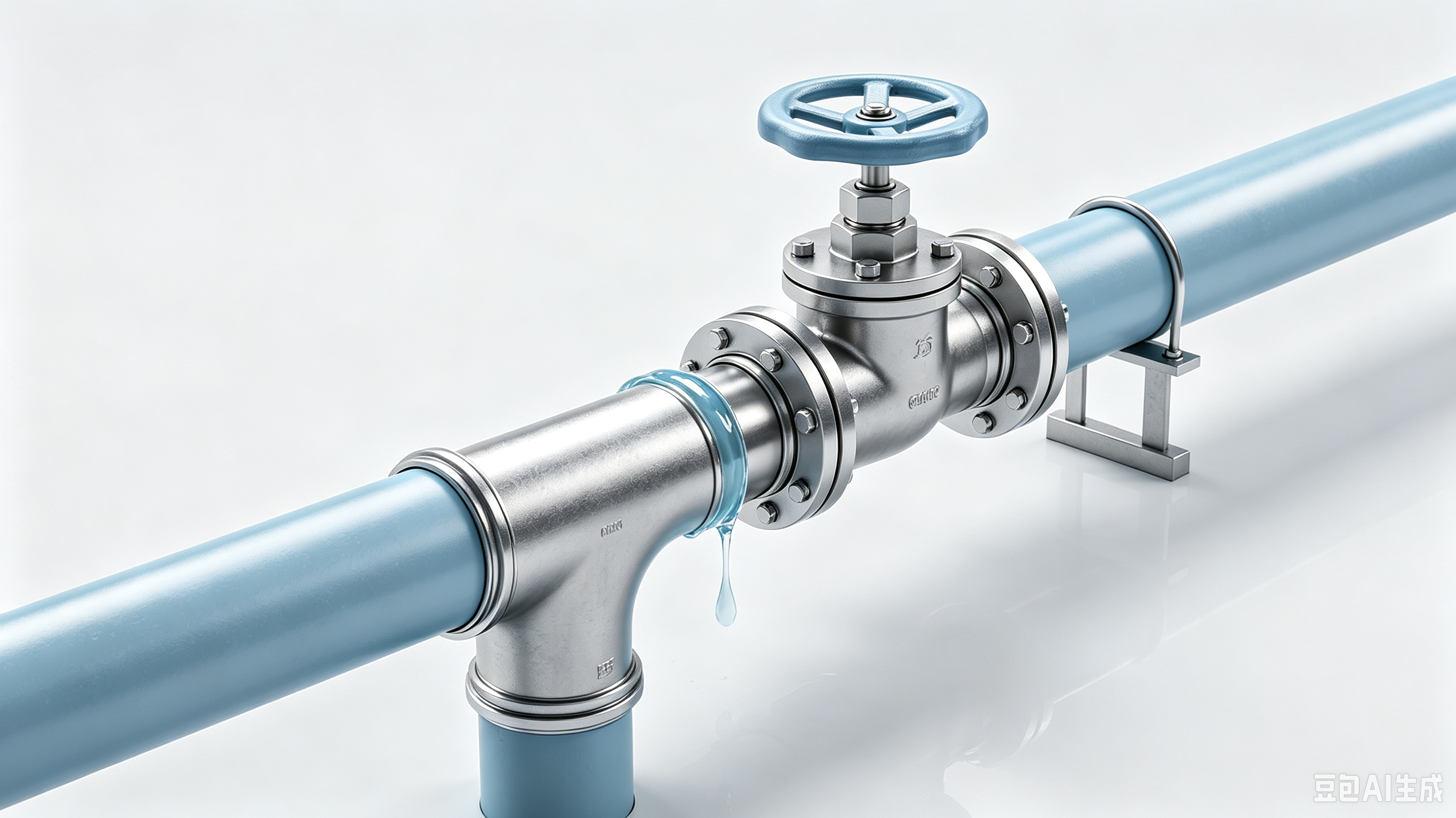
Leaking Industrial Pipelines: The Hidden Killer for Enterprises! A Complete Guide to 4 Major Inspection Solutions
News 2026-08-07
I. Water circulation is indispensable to industrial production, yet pipeline leaks lead to massive hidden losses
Four Severe Hazards
- Equipment Damage: Infiltrated condensate or coolant can short out and ruin precision machinery and GPUs.
- Production Shutdowns: Sudden pipeline ruptures halt production lines, causing output losses far exceeding water charges.
- Safety Risks: Prolonged seepage erodes building foundations, creating collapse hazards for structures.
- Regulatory Penalties: Leaks of industrial wastewater incur heavy fines from environmental authorities.
Traditional manual inspections suffer from extensive blind spots and low efficiency. Below are four mainstream inspection technologies for tailored selection:
- Contact Water Immersion Sensors: Low-cost entry-level option Suitable for pump rooms and power distribution room floors; prone to corrosion, frequent false alarms and large detection blind zones.
- Non-Contact Capacitive Sensors: All-around optimal choice Ideal for liquid cooling pipelines and precision machine rooms. Insulated and corrosion-resistant, with full-area omnidirectional sensing, strong anti-interference performance and zero post-installation debugging; only downside is higher upfront costs.
- Acoustic Inspection: Designed for underground pipe networks Accurately pinpoints concealed underground leak points with non-destructive detection; vulnerable to interference from loud factory ambient noise.
- AI Visual Inspection: Auxiliary ground monitoring tool Leverages existing surveillance cameras to identify pipeline drips, leaks and spills round the clock; unable to detect tiny underground seepages out of camera sight.
II. Practical Implementation Advice for Enterprises
- Conduct a full plant pipeline survey before customizing an inspection solution.
- Implement tiered protection based on risk levels
- High-risk areas (liquid cooling machine rooms / chemical units): Multi-layer protection combining capacitive sensors, acoustic inspection and AI visual monitoring
- Medium-risk areas (pump rooms / pipe galleries): Basic water immersion sensors plus regular acoustic patrols
- Low-risk areas (ordinary workshops): Simple water leakage alarm devices
- Build a closed-loop leakage response system Sensor alarm → Early warning push via APP/SMS → Automatic valve shutoff + drain pump activation → Generate maintenance plan → Repair and system reset
- Integrate leakage checks into daily team patrols, and calibrate sensor sensitivity on a regular basis.
III. Future Industry Trends
Industrial pipeline leakage inspection is evolving toward intelligent prediction, multi-device integration and early hidden hazard alerts. Powered by the Internet of Things (IoT) and AI big data, systems can forecast pipeline aging and corrosion in advance, shifting the management model from post-leak remediation to pre-leak prevention.
The global pipeline leakage inspection market is projected to reach USD 5.56 billion by 2034. Smart pipeline monitoring has become a digital transformation necessity for factories—early deployment avoids costly pitfalls!